China and North Korea Open New Yalu River Border Bridge
China and North Korea inaugurated a new bridge over the Yalu River linking Dandong, China, with Sinuiju, North Korea, aiming to boost bilateral trade despite international sanctions on Pyongyang.
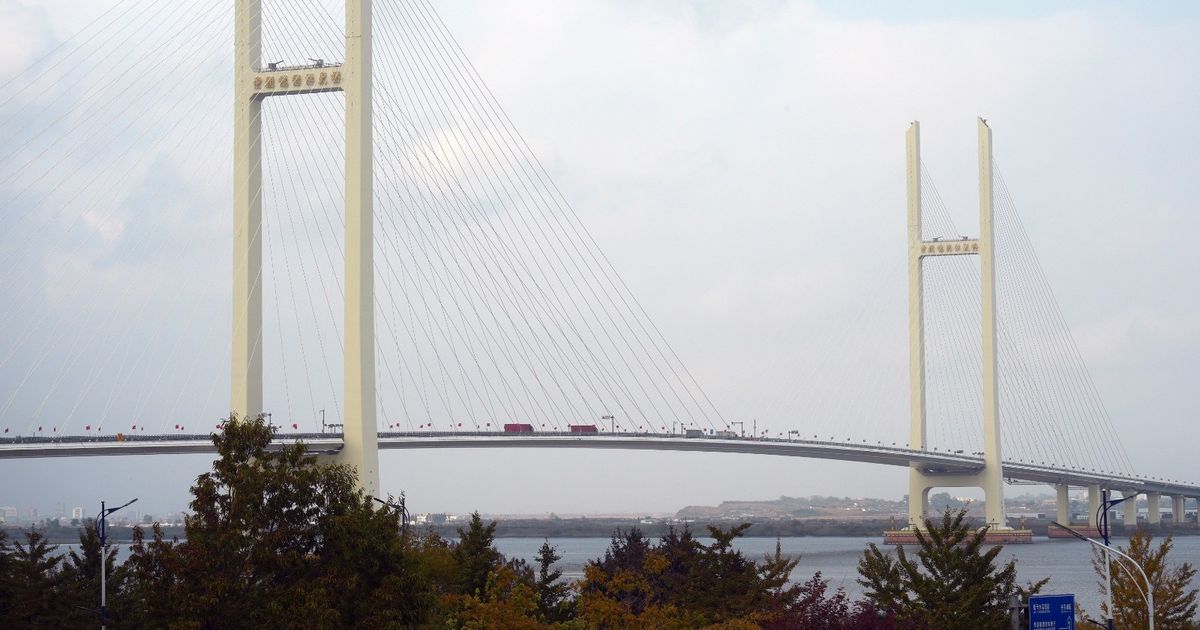
On 15 October 2026, Chinese and North Korean officials opened the new Yalu River bridge, described as the largest land crossing between the two countries. The structure spans about two miles, features four lanes, and replaces an older bridge built in the 1940s that had a single rail line, a single vehicle lane, a weight limit of 20 tonnes and a maximum speed of three miles per hour. Construction was completed in 2014 at an estimated cost of $329 million funded by China, but the bridge remained unused for twelve years due to incomplete North Korean access roads, customs facilities and concerns in Pyongyang about deepening economic reliance on Beijing. Officials said the new bridge will increase the volume and speed of goods that can be transported, potentially expanding trade capacity. Analysts warn that while imports from China may rise more easily, North Korea’s ability to increase exports to China remains constrained by international sanctions and domestic economic limits, which could widen the trade deficit. The opening coincides with broader efforts by Pyongyang to strengthen ties with both Beijing and Moscow; Russia recently opened a smaller bridge over the Tumen River to improve its rail link with North Korea. Trade data show that official Sino‑North Korean trade reached $1.5 billion in the first half of 2026, the highest level since the full implementation of UN sanctions in 2017. However, experts note that growth in imports may outpace exports, leaving the economic benefit uncertain. The bridge does not alter the sanctions regime; it merely expands infrastructure for goods that are already permitted under existing UN resolutions.