European Parliament and Gulf Cooperation Council Condemn Iranian Missile and Drone Attacks, Affirm Right to Self‑Defense
Leaders of the Gulf Cooperation Council legislatures and the European Parliament issued a joint statement condemning ongoing Iranian missile and drone strikes against Gulf states, reiterating the right of self‑defense under UN Charter Article 51, and calling for enhanced maritime security, energy cooperation, and diplomatic efforts on Palestine and Ukraine.
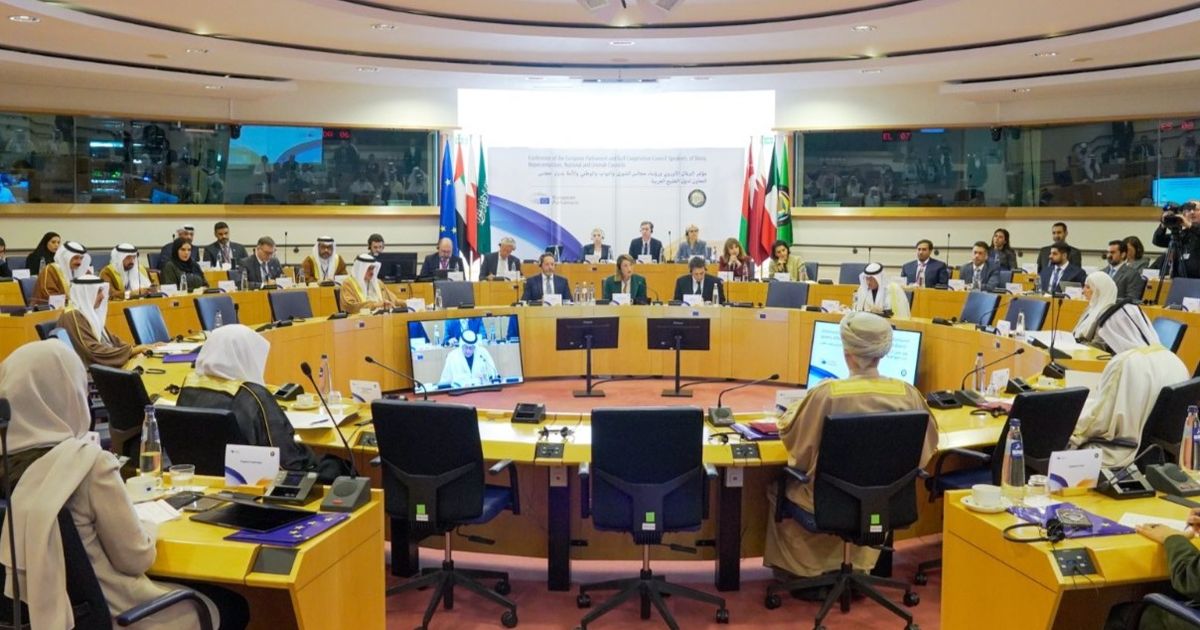
On 16 October 2026, the second conference of the heads of the legislative councils of the Gulf Cooperation Council (GCC) and the European Parliament concluded in Brussels. In the final communiqué, participants denounced "continuous Iranian missile and drone attacks" carried out either directly by Iran or through its proxies against GCC member states, noting that the strikes targeted civilian, economic, and vital facilities, airports, holy sites and service infrastructure, thereby threatening regional and international peace and security.
The statement affirmed solidarity with the Gulf countries and reiterated "the right to self‑defense in accordance with Article 51 of the United Nations Charter," urging Iran and its allies to cease the attacks "immediately and without conditions." It also referenced UN Security Council Resolution 2817 (2026) condemning Iranian attacks on GCC states and Jordan.
Regarding maritime security, the communiqué welcomed coordination on maritime and cyber security, protection of critical infrastructure, counter‑terrorism and efforts to ensure freedom of navigation in the Strait of Hormuz and Bab al‑Mandab. Participants expressed concern over developments in the Red Sea and praised the EU naval operations Aspides and Atalanta, calling for stronger coordination with the Saudi‑led multinational maritime alliance.
On energy, the delegates stressed that energy security and diversification are essential for economic stability and sustainable development, urging the forthcoming EU‑GCC summit to develop joint solutions for reliable, diverse and sustainable energy supplies, infrastructure interconnectivity and cooperation in emerging technologies.
The communiqué also called for a stable and predictable economic framework to resume negotiations for a comprehensive free‑trade agreement between the EU and GCC, describing it as a foundation for deeper trade and investment ties. It advocated deepening the partnership into a "strategic partnership" with a parliamentary dimension, enhancing cooperation on energy, trade and regional security, and protecting supply chains from sanctions evasion.
Concerning Palestine, participants stressed the need to protect civilians, ensure unhindered humanitarian assistance and support a just, comprehensive and lasting peace based on the two‑state solution. On Ukraine, they demanded an immediate cease‑fire and work toward a comprehensive, just and durable peace, commending Gulf humanitarian efforts, including prisoner exchanges and the return of Ukrainian children.
Finally, the statement highlighted parliamentary diplomacy as a permanent pillar of EU‑GCC cooperation, agreeing to hold alternating regular meetings, expand exchanges involving youth, academia, civil society and cultural institutions, and keep the door open for collaboration in other areas of mutual interest.