Israeli Settlement Expansion Accelerates in West Bank, Drawing Comparisons to South African Model and Nakba
Recent reports describe a rapid increase in Israeli settler activity in the occupied West Bank, including the establishment of pastoral outposts, new settlements, and infrastructure projects. Analysts compare the expansion to historical settler models in South Africa and to events surrounding the 1948 Nakba, while Palestinian and Israeli human rights groups warn of land seizures, displacement of rural communities, and undermining of the Oslo Accords.
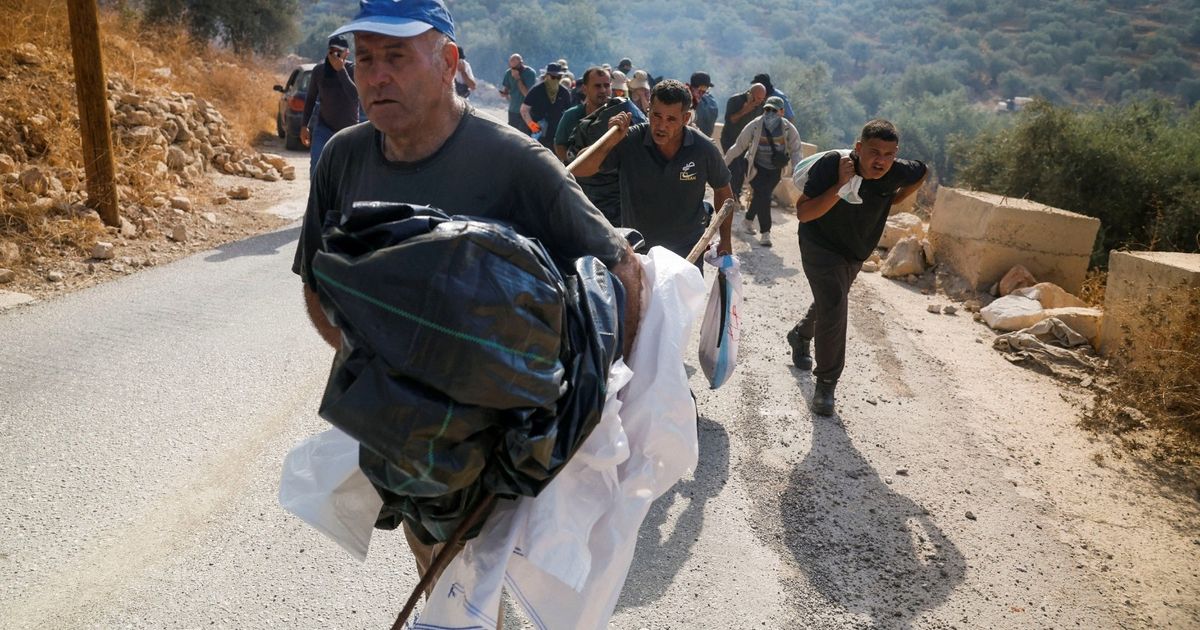
From Ramallah to Jericho, observers note new settler farms resembling those established by white settlers in South Africa. Settler groups have been installing barbed wire fences and extending enclosures along roads such as the "Al-Mu'rajat" route, behind which they graze cattle and sheep and have erected small outposts and settlements. Military patrols accompany these activities to provide protection.
Israeli officials and settlement organizations say the initiative began shortly after the current Israeli government formed and intensified after the October 7, 2023 Hamas attack and the ensuing Gaza war. According to Israeli NGOs B'Tselem and Yesh Din, settler pastoral outposts have taken control of approximately 18% of the West Bank’s area. Prime Minister Benjamin Netanyahu reportedly stated that the government has authorized 165 such pastoral outposts and approved construction of 104 new settlements, bringing the total number of outposts to 365 and settlements to about 270.
The expansion initially targeted Area C—the rural zone under full Israeli civil and administrative control per the Oslo Accords, comprising over 60% of the West Bank. In the past year, settlers have also moved into areas under Palestinian Authority administration, establishing 26 outposts there. Travelers between Bethlehem and Hebron report seeing 16 new outposts on hills overlooking the road linking the two cities.
Political analysts, including Dr. Ali al-Harawi, argue that the government is using the Gaza war as a pretext to consolidate control over the West Bank, aiming to undermine any future political solution and move toward de facto annexation.
Human rights groups accuse settlers of displacing more than 100 Palestinian Bedouin and herding communities over the last three years, followed by a campaign dubbed the "Olive War" in which olive trees are uprooted, farmers are blocked from accessing groves, and olive harvests are seized or stolen from presses.
Some Israeli media outlets have drawn parallels between current settler militias and pre‑1948 Zionist organizations such as the Haganah, citing groups like "Re"alim" that scout land for settlement. In Ramallah, members of such groups have reportedly filmed tours of northern neighborhoods, after which the Israeli army announced plans to convert the road between Al‑Sarda and Ramallah into a settler‑controlled thoroughfare, potentially separating the city from its northern hinterland.
Critics say the settlement drive constitutes the final stage of dismantling the Oslo Accords, replacing the prospect of a two‑state solution with a patchwork of Palestinian enclaves surrounded by checkpoints and barriers. Economic measures—such as replacing Palestinian workers with Asian laborers, confiscating customs revenues that constitute roughly two‑thirds of the PA budget, and large‑scale infrastructure projects like the upgrading of Route 60 (Jerusalem‑Nablus) into a wide Israeli‑controlled corridor—are described as pressure tactics intended to push Palestinians toward migration.
Israeli cartographer Shaul Arieli, writing in Haaretz, noted that Oslo intended to transfer Area C to the PA, pending final‑status negotiations on Jerusalem, settlements, borders, and water. He argued that the Israeli government's actions aim to annex the West Bank and nullify future political settlements.
While the report presents a detailed picture of settlement expansion, several claims rely on statements from partisan sources (Israeli NGOs, government officials, and selected analysts) and would benefit from independent verification.